It is a Tuesday evening in October 2030.
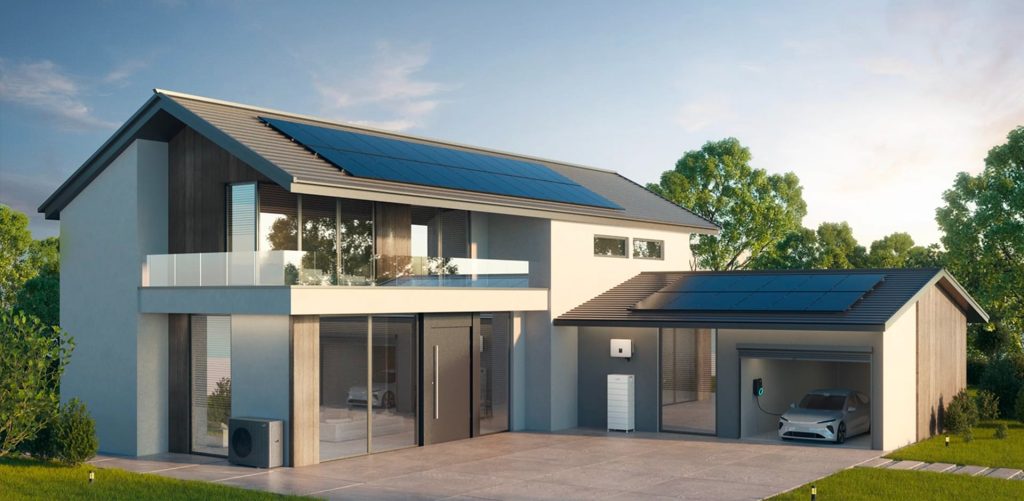
A homeowner arrives home from work, plugs in their electric vehicle and walks into a warm, well-lit house. The dishwasher is running. The battery is charging. Electricity is being bought from the grid for a short period because prices have fallen temporarily. Earlier that afternoon, the same home sold surplus electricity back into the network when demand was high.
The homeowner doesn’t think much about any of this.
The entire process is automatic.
Invisible.
Normal.
The interesting question isn’t whether this future is possible.
The interesting question is whether it has already begun.
Across the UK, millions of households are gradually changing the way they generate, store and consume electricity. Solar panels continue to appear on rooftops. Home battery adoption is increasing. Electric vehicles are becoming more common. Smart tariffs are giving homeowners unprecedented control over when they buy electricity and at what price.
Taken individually, these developments are significant.
Taken together, they suggest something much bigger.
The possibility that energy independence could become a mainstream part of modern homeownership.
A Different Relationship With Energy
For most of modern history, households have had a remarkably simple relationship with electricity.
Energy arrived.
Energy was consumed.
Bills were paid.
Few people questioned the process.
There was no real alternative.
If your home needed electricity, it had to come from the grid.
That relationship is now evolving.
Today, many homeowners can generate electricity, store electricity, export electricity and even choose when to buy electricity. What was once a one-way transaction is becoming a dynamic relationship between households and the wider energy network.
Perhaps the most important thing to understand is that energy independence does not necessarily mean disconnecting from the grid entirely.
For most homeowners, it means something more practical.
Greater control.
Greater flexibility.
Greater resilience.
“The future isn’t about leaving the grid. It’s about depending on it differently.”
The Technologies Driving Change
The vision of a more energy-independent home is no longer based on a single technology.
It is built around multiple technologies working together.
|
Technology |
Role In The Home |
|---|---|
|
Solar Panels |
Generate electricity |
|
Battery Storage |
Store surplus energy |
|
EV Chargers |
Power transport |
|
Smart Tariffs |
Optimise energy costs |
|
Energy Apps |
Monitor and automate usage |
|
AI Systems |
Improve efficiency |
Ten years ago, most homeowners were only familiar with one or two of these technologies.
Today, they are increasingly becoming part of the same conversation.
The modern energy system is no longer centred around a single device.
It is becoming an ecosystem.
Imagine Your Home In 2030
Close your eyes for a moment and imagine your home seven years from now.
The roof generates electricity throughout the day.
A battery stores excess generation.
Your car charges overnight when electricity prices fall.
The home automatically adjusts energy usage based on tariff data.
Excess electricity is exported when prices are attractive.
Heating systems respond intelligently to occupancy patterns.
None of these technologies are experimental.
Most already exist.
The question is no longer whether they work.
The question is how quickly they become mainstream.
2030 Energy Home Snapshot
|
Feature |
Common In 2020 |
Common In 2030? |
|---|---|---|
|
Solar Panels |
Growing |
Highly Common |
|
Battery Storage |
Emerging |
Mainstream |
|
EV Charging |
Limited |
Expected Standard |
|
Smart Tariffs |
Niche |
Widespread |
|
Home Energy Automation |
Rare |
Increasingly Normal |
The Numbers Suggest A Shift
One of the strongest indicators of future adoption is current behaviour.
Across the UK:
- Solar installations continue to grow.
- EV registrations continue to increase.
- Battery storage adoption is accelerating.
- Smart tariff participation is expanding.
Consumers are already voting with their wallets.
This matters because energy transitions rarely happen overnight.
They happen gradually.
A few households adopt new technologies.
Then thousands.
Then millions.
Before long, what once seemed unusual becomes entirely normal.
Consider broadband internet.
Smartphones.
Streaming services.
Electric vehicles.
The pattern is remarkably similar.
What Energy Independence Actually Means
The phrase “energy independence” can sometimes create unrealistic expectations.
Some people imagine a house that never imports electricity.
Others imagine complete disconnection from the grid.
For most households, neither scenario is necessary.
Instead, energy independence often means:
- Generating more electricity locally
- Storing surplus energy
- Reducing reliance on peak pricing
- Having greater control over energy decisions
- Improving resilience during market volatility
In many cases, homeowners aren’t seeking total independence.
They’re seeking meaningful independence.
There is an important difference.
The Challenges Ahead
No serious discussion about the future should ignore the obstacles.
There are still challenges that must be addressed.
Upfront Investment
Renewable energy technologies require capital investment.
Although costs have reduced significantly over time, affordability remains an important consideration.
Grid Infrastructure
The UK energy network continues to evolve in response to growing electrification.
Infrastructure upgrades will remain important.
Consumer Awareness
Many homeowners still find energy technology confusing.
Education will play a major role in accelerating adoption.
Policy And Regulation
Government policy will continue influencing how quickly renewable technologies are adopted across the country.
Future progress depends on stable and supportive frameworks.
Expert Perspective
Industry experts increasingly agree on one thing.
The future home will be far more active in managing energy than today’s home.
Historically, houses simply consumed electricity.
Tomorrow’s homes will generate, store, optimise and potentially trade electricity.
That shift changes the role of the homeowner.
Instead of being passive consumers, households become active participants in the energy system.
“The home of the future won’t just use energy. It will manage it.”
A Family In Two Different Futures
Imagine two families living on the same street in 2030.
Family One generates some of its own electricity, stores energy, charges an EV at home and uses smart tariffs.
Family Two relies entirely on traditional energy purchasing methods.
Neither family is right or wrong.
Neither family is necessarily wealthier.
But their relationship with energy is fundamentally different.
One family has more options.
More flexibility.
More visibility.
More control.
As energy technologies continue to mature, that difference may become increasingly significant.
Frequently Asked Questions
Will every home become energy independent?
Probably not completely. However, many homes are likely to become more energy self-sufficient.
Will solar and batteries become standard?
Current adoption trends suggest they could become increasingly common features of modern homes.
Are smart homes part of the future energy system?
Yes. Automation and intelligent energy management are expected to play growing roles.
Could EVs become part of home energy systems?
Emerging technologies already allow vehicles to interact with home energy systems in new ways.
Looking Back From The Future
If somebody from 2030 looked back at the energy landscape of today, they might find one thing surprising.
Not the technology.
Not the batteries.
Not the solar panels.
The surprise might be how quickly attitudes changed.
For generations, homeowners accepted that electricity was something that arrived from elsewhere.
The idea of generating, storing and managing energy at home seemed unusual.
Today it is increasingly common.
Tomorrow it may simply be normal.
Whether energy independence becomes standard for every home remains to be seen.
What is becoming increasingly clear, however, is that the journey towards greater energy control has already begun.
And millions of homeowners are already part of it.