At 7am, the alarm sounds in the Knowles household.
The heating is already running. The kitchen lights are on. The kettle boils while breakfast is prepared and phones charge on the worktop. Like millions of homes across Britain, electricity is flowing through the property before most of the family are fully awake. What makes this home different is that much of that electricity wasn’t purchased from the grid this morning. It was generated yesterday afternoon, stored overnight and released exactly when it was needed.
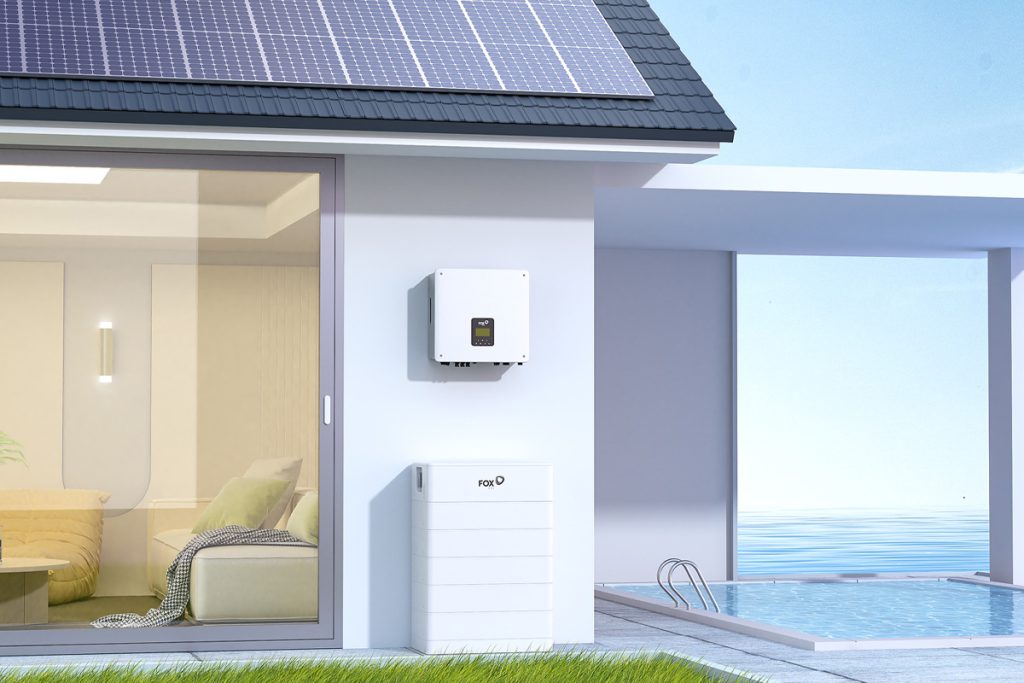
For many homeowners, battery storage remains one of the most misunderstood technologies in the renewable energy sector. Solar panels are visible from the street. EV chargers are mounted proudly on driveways. Batteries, by contrast, quietly sit in garages, utility rooms and plant cupboards, largely forgotten about once installed. Yet for a growing number of households, battery storage is becoming the technology that transforms how energy is used, managed and valued.
To understand why, it helps to stop looking at batteries as products and start looking at them as part of a family’s daily routine.
A Home Without A Battery
Before the Knowles family installed battery storage, their solar panels behaved much like most traditional systems. Electricity generated during the middle of the day was used immediately where possible, but much of it was exported back to the grid because nobody was home to use it. By the time the family returned from work and school, solar generation had already fallen away and electricity once again needed to be imported.
The irony wasn’t lost on them. Their roof was generating energy when they didn’t need it and they were buying energy when they did.
This is the challenge battery storage was designed to solve.
“The real value of a battery isn’t creating electricity. It’s allowing you to use your electricity at the right time.”
The Missing Piece Of The Puzzle
Imagine filling a water tank during the day so you can use the water later that evening. Most people immediately understand the benefit.
Battery storage works in much the same way.
Instead of storing water, it stores electricity.
Instead of relying entirely on when energy is generated, homeowners gain greater flexibility over when that energy is used.
This concept is known as energy shifting, and it has become one of the most important developments in modern home energy management.
When solar panels and batteries work together, homeowners can often increase the amount of self-generated electricity they consume themselves rather than immediately exporting it.
Battery Storage At A Glance
|
Feature |
Typical Range |
|---|---|
|
Battery Capacity |
5kWh – 15kWh |
|
Typical Lifespan |
10-15+ Years |
|
Daily Charge Cycles |
Around 1 |
|
Common Pairing |
Solar PV |
|
Key Benefit |
Increased Self-Consumption |
The numbers themselves are interesting, but the real story lies in how those numbers affect everyday life.
Midday: When Nobody Is Home
At 1pm, the Knowles home is largely empty.
The children are at school. The adults are at work. Electricity demand has dropped significantly. Yet outside, the solar panels are generating more electricity than the property currently needs.
Without a battery, much of this surplus energy would simply leave the property.
With a battery installed, excess generation is stored for later.
Nothing dramatic happens.
No alarms sound.
No switches are pressed.
No action is required from the homeowner.
The process is automatic.
And that’s one reason batteries have become increasingly popular. The technology quietly works in the background while homeowners continue with their daily lives.
Did You Know?
One of the fastest-growing segments of the UK renewable energy market is homeowners adding battery storage to existing solar systems rather than installing both technologies simultaneously.
Evening: The Energy Rush Hour
At 6pm, the family returns home.
The oven is switched on. The television starts streaming. Showers are taken. Laptops are plugged in. Lights illuminate the house as daylight begins to fade.
Across the country, millions of households are doing exactly the same thing.
Energy professionals often describe this period as the evening peak. It represents one of the highest-demand periods of the day.
Ironically, it is also the time when solar generation has largely stopped.
This is where batteries become particularly valuable.
Instead of immediately relying on imported electricity, stored energy can now be used to support the home’s demand.
The solar energy generated hours earlier is finally being consumed.
Not when it was produced.
When it is needed.
Myth Versus Reality
Battery storage has grown rapidly, but misconceptions remain common.
Myth: A battery can power a home indefinitely.
Reality: Battery capacity is finite. The goal is not unlimited power but smarter energy management.
Myth: You must have solar panels to own a battery.
Reality: Many batteries can charge directly from the grid using off-peak tariffs.
Myth: Batteries are only useful during power cuts.
Reality: Most homeowners use batteries daily to improve how they consume and store energy.
What Homeowners Often Notice First
Interestingly, battery owners rarely talk about technical specifications after installation.
They don’t discuss voltage.
They don’t discuss charging curves.
They don’t discuss software updates.
Instead, they tend to notice practical outcomes.
- More evening self-sufficiency
- Better use of solar generation
- Greater awareness of energy consumption
- Increased control over household electricity
In many cases, battery storage changes the way homeowners think about energy entirely.
Electricity stops being something that simply arrives through a meter.
It becomes a resource that can be managed.
Expert Insight
The rise of battery storage coincides with three major trends currently reshaping the UK energy market:
- Continued growth in solar adoption
- Increasing EV ownership
- Expansion of smart energy tariffs
Individually, each trend is significant.
Combined, they create an environment where battery storage becomes increasingly valuable. Batteries allow homeowners to connect these technologies together, creating a more flexible and responsive energy system within the home.
“The future home won’t simply consume electricity. It will actively manage it.”
Quick Questions Homeowners Ask
Can I add a battery to an existing solar system?
In many cases, yes.
How long do batteries last?
Most quality systems are designed to operate for well over a decade.
Are batteries safe?
Modern battery systems incorporate multiple safety protections and monitoring systems.
Do batteries require regular maintenance?
Most systems require very little ongoing maintenance.
The Quiet Revolution Happening In Homes
If you walked into the Knowles household tomorrow morning, you probably wouldn’t notice the battery.
You would see a normal family starting another normal day.
The kettle would still boil.
The heating would still work.
The lights would still switch on.
Nothing about their lifestyle would appear unusual.
Yet beneath the surface, something fundamental has changed. Electricity generated yesterday is helping power today. Energy can be stored instead of wasted. Consumption can be shifted instead of simply accepted.
That is why battery storage is becoming such an important part of the modern energy conversation.
Not because it changes how people live.
Because it changes how energy works around them.