
In 1995, very few homeowners could have predicted how dramatically technology would reshape everyday life over the following three decades. The internet was still finding its feet, mobile phones were largely reserved for business users and the concept of streaming films, controlling household devices from a smartphone or working remotely would have sounded futuristic to most people. Yet within a relatively short period of time, technologies that once felt revolutionary became completely normal.
The energy sector is now entering a similar period of transformation.
Across Britain, homeowners are witnessing the early stages of a fundamental shift in how energy is generated, stored and consumed. Solar panels are appearing on rooftops at record rates. Battery storage systems are becoming increasingly common. Electric vehicles are changing the way households think about transportation, while smart technologies are introducing levels of control that would have been impossible only a few years ago.
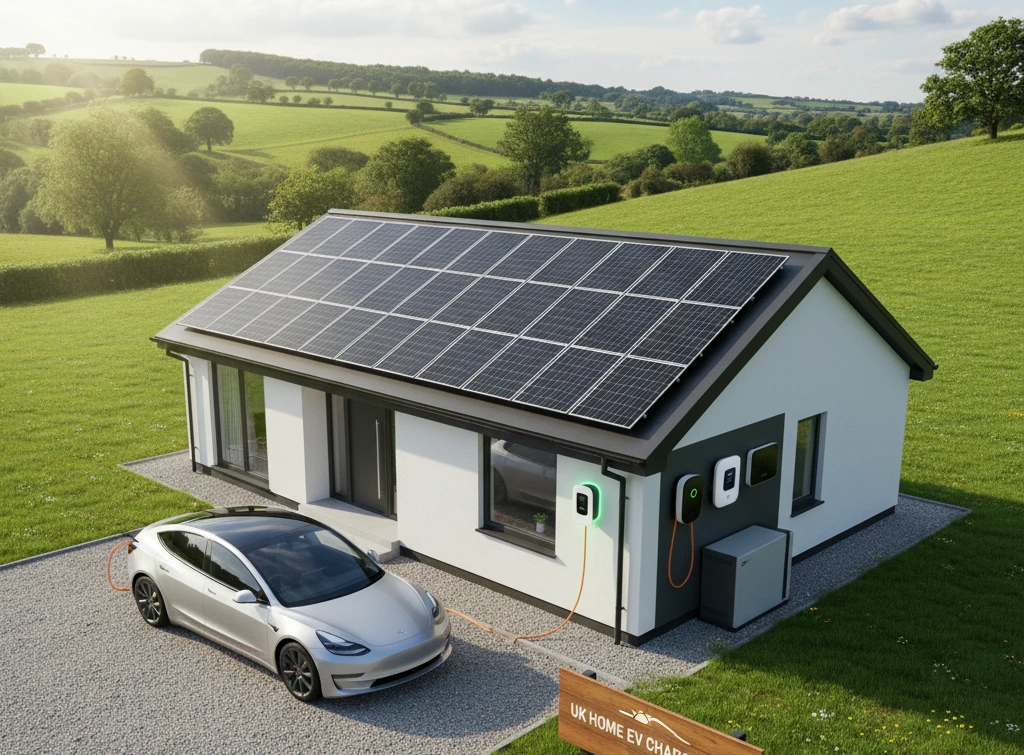
What makes this period particularly fascinating is that these technologies are no longer developing in isolation. They are beginning to converge into a connected ecosystem where homes generate electricity, batteries store it, vehicles consume it and intelligent software manages the entire process automatically.
The result is not simply an upgrade to existing systems.
It is the emergence of an entirely new relationship between homeowners and energy.
Looking Beyond The Solar Panel
For many years, solar panels dominated conversations about renewable energy. Understandably so. They were the most visible technology and often represented a homeowner’s first step towards generating electricity independently.
Today, however, industry experts increasingly view solar panels as only one component within a much larger picture.
The future home may include:
|
Technology |
Future Role |
|---|---|
|
Solar Panels |
Energy Generation |
|
Battery Storage |
Energy Management |
|
EV Charging |
Transportation Energy |
|
Smart Tariffs |
Cost Optimisation |
|
AI Software |
Automated Decision Making |
|
Vehicle-To-Home Systems |
Energy Flexibility |
This evolution matters because future energy systems will likely be judged not by how much electricity they generate, but by how intelligently they manage it.
Generation remains important.
Management may become even more important.
The Rise Of The Intelligent Home
Imagine arriving home from work in 2035.
Your electric vehicle automatically begins charging because your energy management system has identified a period of low electricity prices. At the same time, your battery adjusts its charging behaviour based on weather forecasts predicting strong solar generation the following day. Meanwhile, non-essential appliances operate automatically during periods when electricity costs are lowest.
Nothing requires manual intervention.
The system quietly manages itself.
While this scenario may sound futuristic, many of the technologies required already exist today. What is changing is the level of integration between them.
Historically, homeowners have been responsible for managing energy decisions manually. Future systems are increasingly expected to automate those decisions, using data, forecasting and machine learning to improve efficiency.
“The future homeowner may spend less time managing energy than ever before while achieving greater control than ever before.”
This paradox sits at the heart of the smart energy revolution.
The Vehicle Becomes Part Of The Energy System
One of the most exciting developments currently being explored involves the relationship between electric vehicles and residential energy systems.
Traditionally, vehicles have been viewed purely as consumers of energy. Petrol vehicles consumed fuel. Electric vehicles consume electricity. The relationship was simple and one-directional.
Emerging technologies are beginning to challenge that model.
Vehicle-to-home systems, often referred to as V2H technology, allow energy stored within an electric vehicle battery to be used elsewhere. Rather than acting solely as a consumer, the vehicle may also become a temporary energy storage asset.
Imagine an electric vehicle parked on a driveway holding enough stored energy to support household consumption during specific periods.
While adoption remains in its early stages, many analysts view this area as one of the most significant developments in residential energy.
Future Possibilities For EV Integration
- Vehicle-to-home energy transfer
- Vehicle-to-grid participation
- Smart charging optimisation
- Dynamic tariff integration
- Automated energy balancing
The implications extend far beyond transportation.
Why Battery Storage Could Become The Centre Of Everything
If solar panels have been the stars of the renewable energy industry over the past decade, batteries may become the central organisers of the next.
The reason is simple.
Modern homes are becoming increasingly dependent on electricity.
Electric vehicles.
Heat pumps.
Smart appliances.
Home offices.
Entertainment systems.
The list continues to grow.
As electricity demand increases, the ability to store energy becomes increasingly valuable.
Battery systems provide flexibility that generation alone cannot provide. They allow electricity to be used when required rather than solely when produced.
This capability may become even more important as dynamic energy pricing becomes more widespread.
The Evolving Role Of Batteries
|
Yesterday |
Tomorrow |
|---|---|
|
Store surplus solar |
Manage entire home energy systems |
|
Support self-consumption |
Optimise energy costs |
|
Backup power option |
Active energy management |
|
Standalone technology |
Connected ecosystem hub |
Industry observers increasingly believe batteries will move from supporting technologies to central technologies.
The Role Of Artificial Intelligence
Artificial intelligence is already influencing countless aspects of modern life, and home energy management appears likely to follow a similar trajectory.
Future systems may analyse:
- Household consumption patterns
- Weather forecasts
- Grid demand
- Energy prices
- Vehicle charging requirements
- Battery performance
Using this information, systems could automatically determine when to store energy, when to consume it and when to export it.
Rather than homeowners needing to understand complex energy markets, software may perform those calculations on their behalf.
The technology itself becomes less visible.
The outcomes become more important.
What Could A British Home Look Like In 2040?
Predicting the future is always dangerous. History is filled with confident predictions that failed to materialise. However, examining current trends provides useful insight into where the industry may be heading.
A typical home in 2040 may include solar generation, battery storage, EV charging and automated energy management as standard features rather than premium upgrades. Homeowners may monitor energy performance through integrated apps while intelligent systems continuously optimise usage in the background.
Properties could potentially generate, store, consume and trade electricity with minimal homeowner involvement.
The home itself may become an active participant within the wider energy network.
Whether every prediction becomes reality remains uncertain.
What seems increasingly likely is that energy systems will become more connected, more intelligent and more flexible than those we use today.
Expert Commentary
When energy professionals discuss future trends, a common theme repeatedly emerges.
The future is not about individual technologies.
The future is about integration.
Solar panels alone are useful.
Battery storage alone is useful.
EV charging alone is useful.
The real transformation occurs when all three begin working together.
“The next decade will not be defined by better solar panels. It will be defined by better energy ecosystems.”
That distinction may prove to be one of the most important developments of all.
Frequently Asked Questions
Will every home have battery storage in the future?
Not necessarily, but adoption is expected to continue increasing as technologies mature and homeowner awareness grows.
Could electric vehicles power homes?
Emerging vehicle-to-home technologies are being developed to enable exactly that capability.
Will artificial intelligence manage home energy systems?
Many experts believe AI will play an increasingly important role in optimising energy generation, storage and consumption.
Are solar panels still important?
Absolutely. Solar generation remains the foundation upon which many future energy systems will be built.
The Next Chapter Of Home Energy
When future generations look back at the energy systems of today, they may see them in much the same way we now view dial-up internet connections or early mobile phones. The technology worked, but it represented only the beginning of a much larger transformation.
Solar panels introduced homeowners to the idea that energy could be generated at home. Battery storage introduced the idea that energy could be stored. Electric vehicles introduced the idea that transportation could be powered differently. Artificial intelligence is introducing the idea that energy can be managed automatically.
Individually, these innovations are significant.
Collectively, they are reshaping the future of residential energy.
The question is no longer whether change is coming.
The question is how quickly British homes will adapt to a future that is already beginning to take shape.


