Most homeowners don’t wake up one morning and decide to buy solar panels.
The journey usually begins much earlier.
Perhaps a neighbour has recently had a system installed. Maybe electricity bills have become an increasingly frustrating part of monthly household expenses. For some, it’s the sight of solar panels appearing on rooftops throughout their town. For others, it’s the arrival of an electric vehicle on the driveway that suddenly changes the way they think about energy. Whatever the trigger, the same questions tend to follow.
How do solar panels actually work?
Will they work on my house?
How much electricity can they produce?
Are they worth it?
The problem is that once homeowners start researching solar online, they often find themselves drowning in technical language. Inverters, kilowatts, photovoltaics, export tariffs, battery storage and panel efficiency ratings quickly begin to blur together. What should be a straightforward decision suddenly feels complicated.
The truth is that solar panels are much easier to understand than many people realise.
The Simple Explanation Most Homeowners Are Looking For
Imagine your roof could quietly produce electricity every day without making a sound.
No fuel deliveries.
No moving parts.
No smoke.
No noise.
Just electricity generated whenever daylight reaches the panels.
That is essentially what solar panels do.
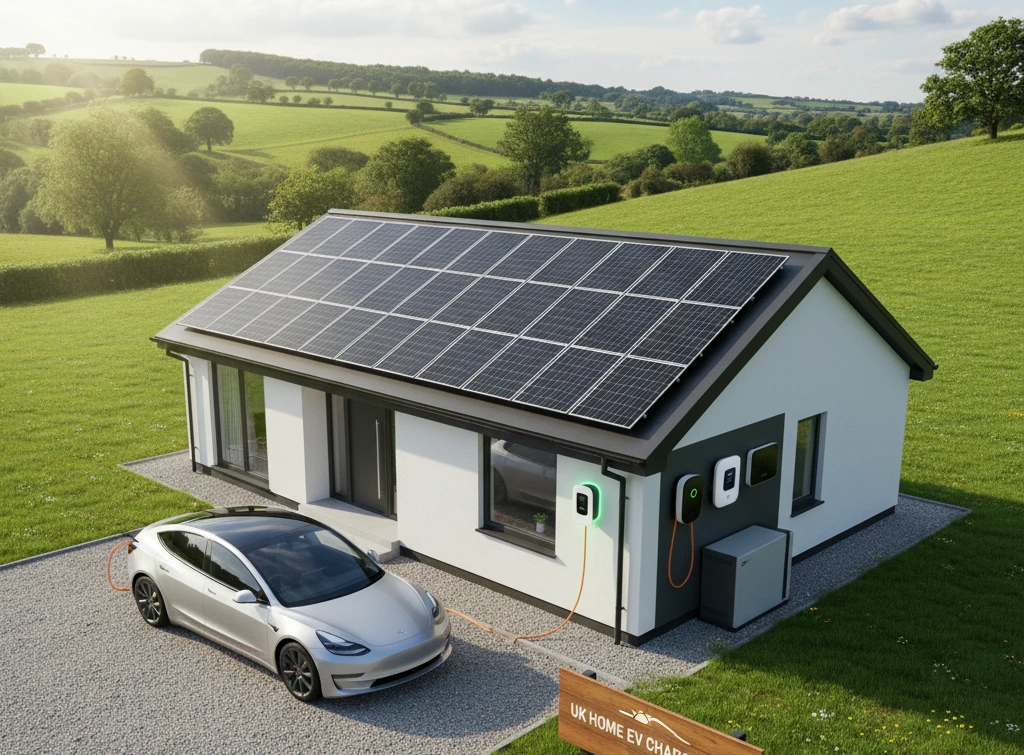
Inside each panel are photovoltaic cells. These cells react when exposed to daylight, creating an electrical current. The electricity generated then passes through an inverter, which converts it into a form your home can use.
Your television doesn’t know whether the electricity powering it came from a power station hundreds of miles away or from the roof directly above your head.
Your kettle doesn’t know.
Your washing machine doesn’t know.
The electricity works exactly the same way.
The difference is simply where it came from.
“Solar panels don’t change how you use electricity. They change where some of that electricity comes from.”
This is often the moment when solar begins to make sense to homeowners. Rather than buying every unit of electricity from an external supplier, some of it can be generated directly from the property itself.
Solar At A Glance
Before we go any further, here’s a quick overview of what many homeowners want to know.
|
Question |
Short Answer |
|---|---|
|
Do solar panels work in the UK? |
Yes |
|
Do they work on cloudy days? |
Yes |
|
Can they reduce electricity imports? |
Yes |
|
Do they require much maintenance? |
Usually very little |
|
Can I add battery storage? |
Yes |
|
Can I export excess energy? |
Yes |
|
Do they last a long time? |
Typically decades |
The details behind those answers are where things become interesting.
What Happens Throughout A Typical Day?
One of the easiest ways to understand solar is to follow the journey of electricity through a normal day.
At sunrise, solar panels begin generating electricity as daylight reaches the roof. Generation increases throughout the morning and often peaks around the middle of the day. During this time, household appliances may be using electricity directly from the solar system.
If the property is producing more electricity than it is using, the surplus energy doesn’t disappear. Depending on the system design, it may be exported to the grid or stored within a battery for later use.
As evening arrives and solar generation reduces, the property begins relying more heavily on stored electricity or imported electricity from the grid. Overnight, the cycle pauses until daylight returns the following morning.
For many homeowners, visualising this daily flow makes solar far easier to understand than any technical specification sheet ever could.
A Typical Solar Day
|
Time |
What Happens |
|---|---|
|
Morning |
Generation begins |
|
Midday |
Peak production |
|
Afternoon |
Surplus may be exported |
|
Evening |
Battery or grid power used |
|
Overnight |
Grid or stored energy used |
The Solar Myth Classroom
Every industry develops myths.
Solar is no exception.
Some of these misconceptions have existed for years, while others continue to circulate online despite being repeatedly disproven.
Myth: Britain Isn’t Sunny Enough
This remains one of the most common concerns.
The reality is that solar panels generate electricity from daylight rather than direct sunshine alone. Bright sunny conditions increase production, but electricity generation continues during cloudy weather.
This is one reason why countries with climates similar to the UK have successfully adopted solar at scale.
Myth: Solar Panels Only Work In Summer
Summer months generally produce the highest outputs.
However, solar systems continue generating electricity throughout the year. Winter production may be lower, but it does not stop entirely.
Myth: Every Roof Must Face South
South-facing roofs often achieve excellent results, but they are not the only suitable option.
Many east-facing and west-facing roofs perform extremely well.
Every property should be assessed individually.
Understanding The Components Behind The Panels
Homeowners often focus entirely on the panels themselves, but a solar installation is really a team of technologies working together.
The Main Components
- Solar panels
- Inverter
- Mounting system
- Monitoring platform
- Battery storage (optional)
The inverter is particularly important because it converts generated electricity into a usable form for the home. Many industry professionals would argue that the inverter is the true brain of the system.
Modern monitoring platforms have also transformed the homeowner experience. Instead of guessing whether a system is performing well, users can often view live performance data from their phone.
Generation.
Consumption.
Export.
Battery charge levels.
Everything becomes visible.
Did You Know?
More than two million solar installations now exist across the UK.
That means millions of homeowners have already decided that generating some of their own electricity makes sense.
Five Questions To Ask Before Getting Quotes
Before speaking to any installer, it is worth taking a moment to think about your own circumstances.
The best solar systems are designed around households rather than roofs.
Ask yourself:
✓ How much electricity does my household currently use?
✓ Am I considering an electric vehicle in the future?
✓ Do I work from home?
✓ Would battery storage interest me?
✓ How long do I expect to remain in the property?
The answers often influence system design far more than people expect.
Expert Insight
One of the biggest mistakes homeowners make is comparing solar systems purely on price.
A cheaper system is not always the better system.
A larger system is not always the better system.
A well-designed solar installation should be based on the property’s characteristics, energy usage patterns and future plans rather than simply the number of panels that can fit on a roof.
“Good solar design starts with understanding the homeowner, not the hardware.”
Common Solar Terms Explained
|
Term |
Meaning |
|---|---|
|
kW |
Unit of power |
|
kWh |
Unit of energy |
|
Inverter |
Converts electricity for home use |
|
Battery Storage |
Stores excess energy |
|
Export Tariff |
Pays for exported electricity |
|
PV |
Photovoltaic |
Learning these few terms can make solar conversations dramatically easier to follow.
Frequently Asked Questions
Can solar panels damage my roof?
When installed correctly on a suitable roof, solar panels should not damage the structure.
Do solar panels require cleaning?
Most systems require very little maintenance, with rainfall often helping keep panels clean.
Can I install a battery later?
In many cases, yes. Many homeowners choose to add battery storage after their initial solar installation.
What happens if I move house?
The solar system remains with the property and may become an attractive feature for future buyers.
The Bigger Picture
Solar panels are often discussed as pieces of technology.
In reality, they represent something much broader.
They change the relationship between homeowners and energy.
For generations, households have been entirely dependent on buying electricity from elsewhere. Solar introduces a second option. It allows homeowners to generate at least some of that energy themselves.
Whether solar is right for every property is a separate question.
But understanding how it works, what it does and what role it can play within a modern home is the first step towards making an informed decision.
And that is exactly where every successful solar journey begins.